By Kate Holden
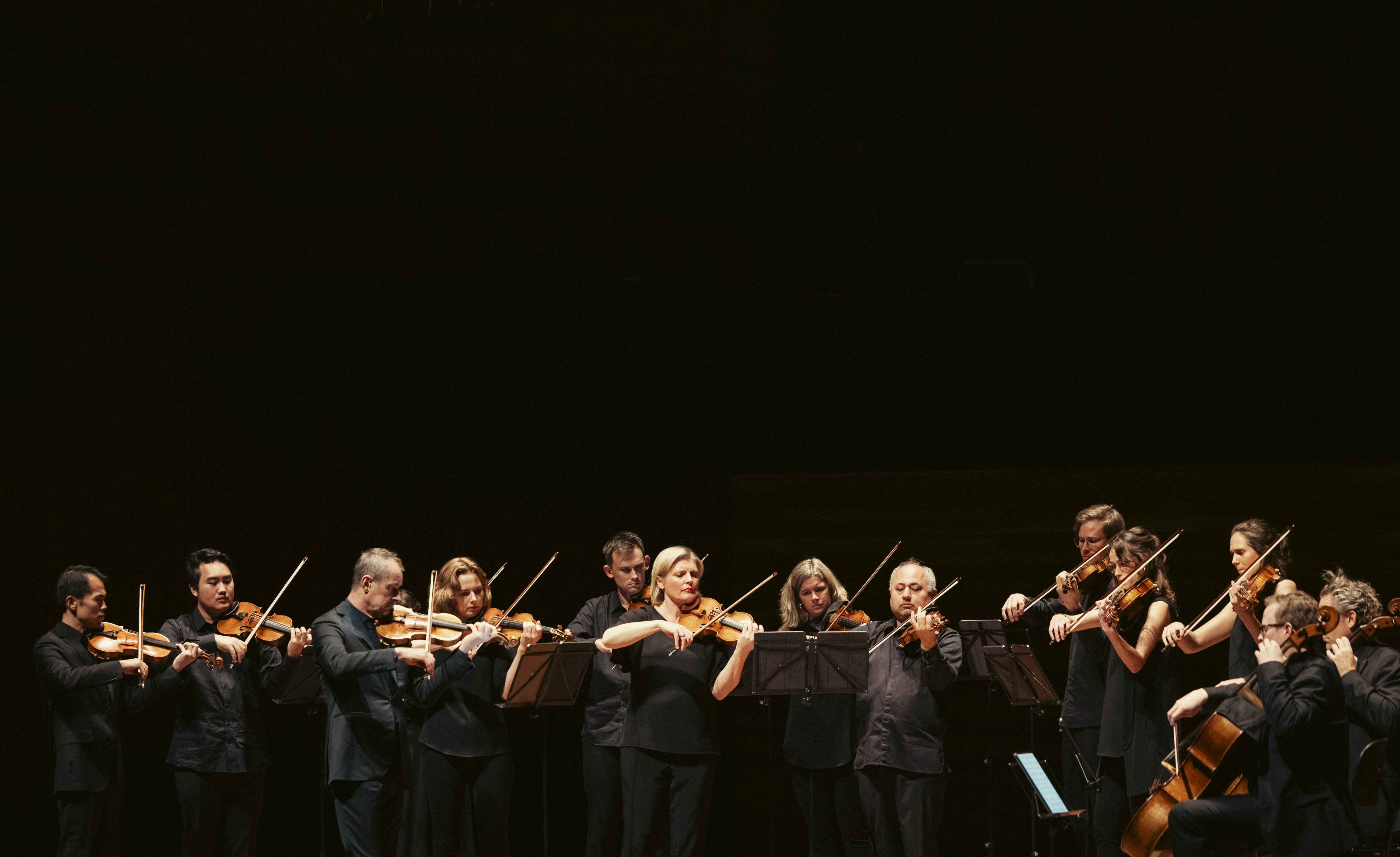
Principal Viola Stefanie Farrands is enraptured by her 1610 viola, made in Brescia by Giovanni Paolo Maggini, a pupil of Gasparo da Salò. Farrands warns that her passion for the instrument, purchased by the ACO Instrument Fund only recently, is still so intense she may cry.
“For a long time, the Orchestra was on a search for a viola,” she says. “It was years and years of a long, gruelling search. This one we found in New York – it was sitting among an array of many other violas. It was number five. And the second I picked it up – this is after several hours of critiquing and trialling and experimenting and opening your ears to the character of every single instrument – number five resonated on my collarbone. And I was just overwhelmed with emotion.”
The subsequent months of trying it incognito on various stages and with different strings, players and scenarios only confirmed her adoration. She had never expected such a transcendent experience. The Fund sold a Guarneri violin to pay for the Maggini.
“I can’t really express how unique the singular connection between one player and an instrument is. It feels like an extension of your own self, in a way. When it’s in my arms, I’m not sure where my fingers end and where it starts.ACO Principal Viola Stefanie Farrands

"But at the same time, it gifts you with so many different possibilities and a sound palette that is beyond your dreams as a player, beyond anything you could conjure up yourself. So it opens your entire mind up into a world of possibilities.”
The viola has an old soul, she says, and its complexity – “every shade and every nuance” – comes with age. “It’s lived through so many world wars and parts of history. I can’t even conceptualise where it’s been and whose hands it’s been in, which is magical for me to imagine.” A viola, she explains, is a mysterious creature, not always understood by audiences. It’s physically taxing to play. This one “takes all of you, every iota of your being”. “But it shows you things as well. That’s something that these Golden Age instruments have: they create, they give ideas, and you give it ideas too.”
It’s a rich, mysterious beauty. “That’s what I love about the feel: the complexity and the dark sonority that it has, a red wine sound,” Farrands says. “It just makes me weak at the knees.” The changes, the flaws and scars of its history, she loves it all. Only a short time into the ACO’s experience of the instrument, already she is certain of one thing: “There is nothing that will ever sound like this does.”
You can see and hear the Maggini viola, alongside our incredible collection of Golden Age instruments, played by ACO Principal Viola Stefanie Farrands in upcoming ACO tours nationally. Our next National Tour is The Devil's Violin, touring Wollongong, Melbourne, Adelaide, Perth, Sydney, Brisbane and Canberra, 12 - 28 March.