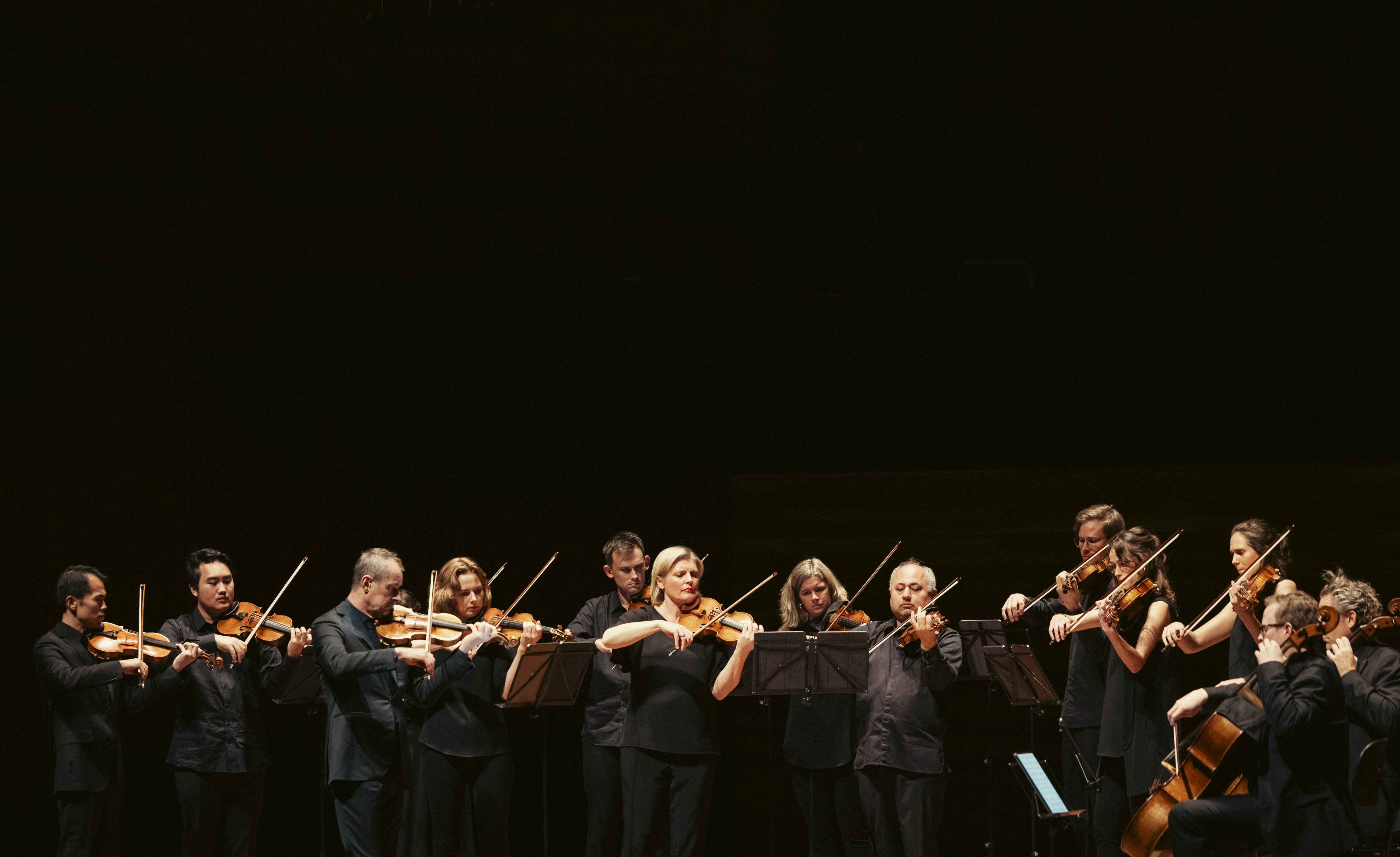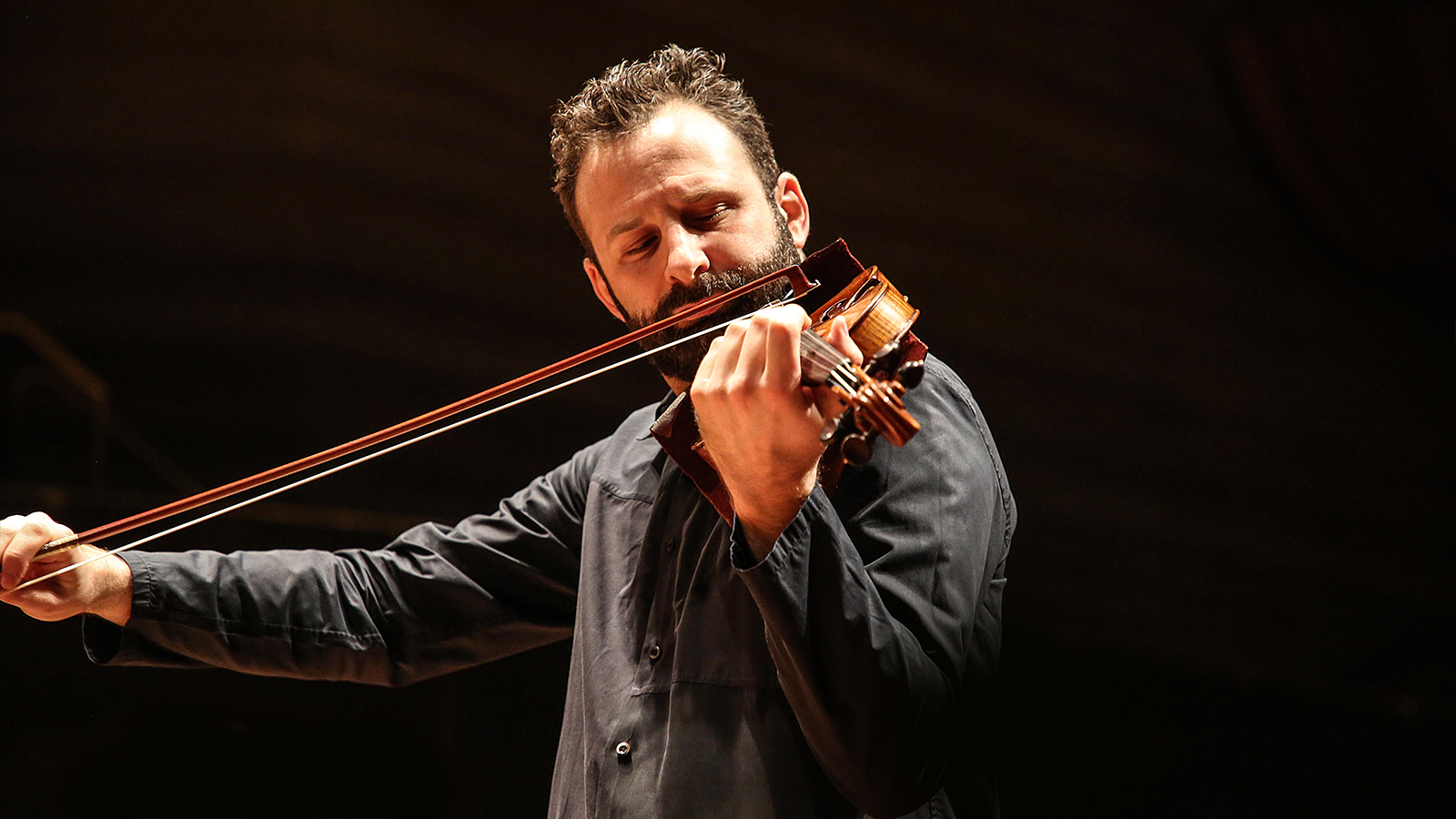
The Devil’s Violin, directed by renowned violinist Ilya Gringolts, allows the Australian Chamber Orchestra to showcase its collection of stunning Golden Age instruments.
Ilya Gringolts returns to Australia for The Devil's Violin, touring Wollongong, Melbourne, Adelaide, Perth, Sydney, Brisbane and Canberra, 12-28 March.
Written by Kate Holden
An ancient tree, an old painting, a monument: whenever we encounter one we poignantly imagine what it has seen in its time. So what do we feel for a musical instrument that has not only witnessed but become history?
The 1998 film The Red Violin depicted a fictional instrument on its passage from baroque Cremona, heart of masterpiece luthiery, through 18th century Vienna, 19th century Oxford, Cultural Revolution China, and into 1990s Canada. That instrument plays in many hands and moods through fortunes and perils, and yet its magic is that it stays the same: serene in its production of musical beauty, in the endurance of its fragile wooden shape, in its precious significance and inspiration for its musician custodians. For some in the real world who hold such implausible survivors, they are superlatively made tools of the greatest period with which to explore; for others, a mystically seasoned, almost enspirited partner in creating music.
In The Devil's Violin, the ACO highlights some of its collection of Golden Age instruments, the marvel that is a shaped box of wood that can, at a whisper of vibrated air, transport us to another world and time.
For Ilya Gringolts, who will be directing the Orchestra and performing Giuseppe Tartini’s famous showcase piece, The Devil's Trill, and Vivaldi’s Concerto for Two Violins in C major, wielding an antique is a familiar privilege of his career. He has had use of three Stradivarius pieces and recently returned to a rare Guarneri “del Gesù”. The violin dates from 1743 and is an exemplar of Guarneri’s provocative experimentation with details such as the f-holes and rib heights.
Its distinction seems suitable for Gringolts, known for immaculate performance and constant, restless extension of his craft. For him, a frequent devotee of gut strings and a lover of both canonical baroque and blazing contemporary composition, the use of a Golden Age instrument is less about prestige than accessing its wonderful range and qualities.
Though known for his careful research and preparation, he is not pursuing historical authenticity as much as a quality – flexing, textured and active – that keeps him safe from complacency.
He’ll be putting gut strings on his instrument for this program, he says over video link from his home in Zurich, for both the older and newer works. “For me, the joy of playing gut has nothing to do with authenticity or trying to evoke the old sound, because it’s impossible,” he tells me. Technologies and techniques have changed, he says, and that’s fine. But the antique ways, the precariousness of using gut or the raw, robust sound of a Guarneri or the 1718 “ex-Prové” Stradivarius he also plays, give Gringolts the nervy energy with which he can make an unforgettable performance.
“That's exactly what I like. The slight scratchiness, the immediate response, something visceral there: wild, you know? It’s sort of moody. I need to work with that. It’s vulnerable, like a person can be.” Paganini – whose Caprices Gringolts has recorded – played a Guarneri, as does the ACO’s Richard Tognetti. The instruments have the ballast of time and fame but they can lift an exceptional artist into stratospherics of possibility.
Guarneris, Gringolts explains, are known for their dark sound, the thrum of the lower register in an essentially soprano instrument. “It’s got this very powerful baritone, almost bass,” he says, “a richness, almost a cello quality” he’s hoping to intensify by trying gut on it for the first time, while bringing out a finer vulnerability in the upper strings. “Guarneri is the kind of instrument you can really trust. An instrument that is very robustly built,” he says. “I mean, some of his instruments look as if he just made them with the common saw or something. They’re not refined, the way that Strads are. He was known for that. It’s very rough violin making. Very muscular. You can hear that in the sound.”
While a Golden Age instrument can be light to hold, they’re weighty to play, even for a performer of Gringolts’s experience. “It’s a great luxury and a great responsibility, of course,” he says thoughtfully. “It’s also a great challenge” – and one can hear his enthusiasm engage at the thought – “because these instruments are very layered. Just discovering those possibilities and deciding what to do with them and how to use them to the music’s advantage, that’s the challenge. But of course, the returns are huge.”
An antique instrument, unlike a newly made one, often survives only in its body, so – unlike ready-assembled new ones – modern adjustments and experiments can be made with bridge positions and other parts. This is, perhaps, analogous to Gringolts’s range across the classical canon and his zeal for new works.
“To be honest, I stopped making a distinction between old and new music for myself a long time ago,” he says. “It’s just music, music that I choose to play. I mean, all the old music was once new.”
His happy place is playing baroque on baroque instruments, but though he’s pulled back from commissioning into greater attention on existing contemporary works, he’s fascinated by the ways music serves audiences in the modern era.
Music in the 1720s, he proposes, was “mostly a beautiful escape” from a largely miserable life, its forms offering harmony, reconciliation and reliable patterning. Now, although we like to complain, “lives are comfortable and we’re looking for something that will actually provoke us”, he says. Unlike 300 years ago, we have millions of ideas zapping past us, multiple and diffuse. He’s stimulated by the variety. “Yes, I enjoy that. It moves me. You need to get down and dirty but then be purified. And I go back and forth in between those extremes.”
Gringolts pursues whatever will give him the capacity to soar, and the scrape of the real. The beautiful thing he holds lightly in his left hand: “It is an instrument. It’s a tool. It’s a tool for you to use for a higher purpose, right?” But he can’t help wondering, “what was it doing in 1824?”
Ilya Gringolts returns to Australia for The Devil's Violin, touring Wollongong, Melbourne, Adelaide, Perth, Sydney, Brisbane and Canberra, 12-28 March.