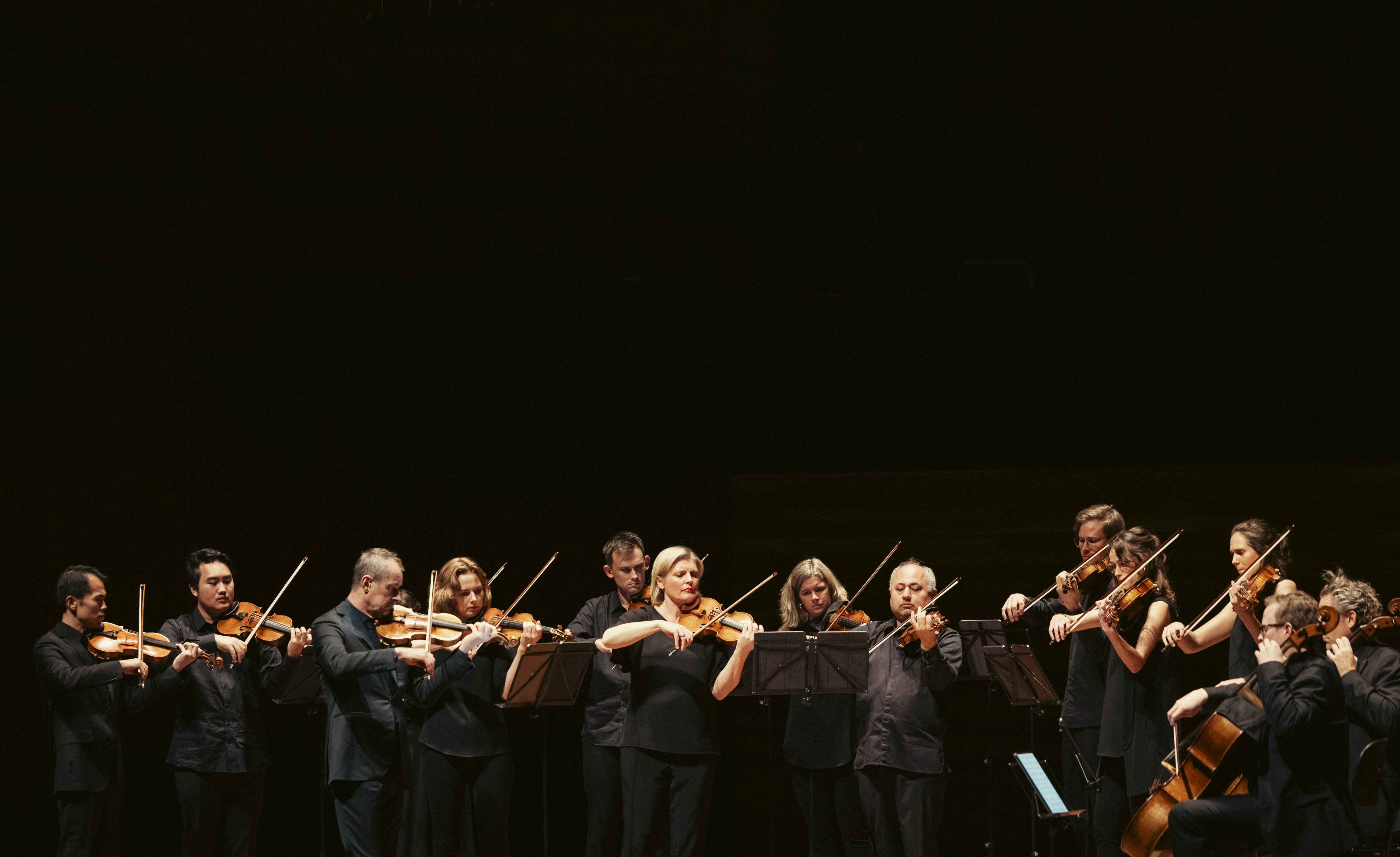
In addition to performing as a violinist with the ACO, Aiko Goto is also an internationally regarded teacher and director of ACO Academy. She reflects on how her own teachers shaped her as a musician.
Words by Helen Pitt
ACO violinist Aiko Goto was four when she met her great uncle, world-renowned music educator, Dr Shinichi Suzuki, for the first time. It was in her native Tokyo, where the creator of the “Suzuki method” had gathered over 1000 student string musicians for an annual concert.
“I was carrying my pink violin case, which my mother had sewn. Dr Suzuki walked toward me and could see I was nervous before I went on stage. He squatted down to the same height as me and asked me if I loved playing the violin and if my case was hand made by my mother. He was trying to connect with me and calm me down. I’ve never forgotten that”, she recalls over five decades later.
Aiko still has that violin case her mother made for her, and that love of music which she inherited from Dr Suzuki, who believed that every child, if properly taught, could learn a musical instrument as naturally as they learnt to speak in their “mother tongue”.
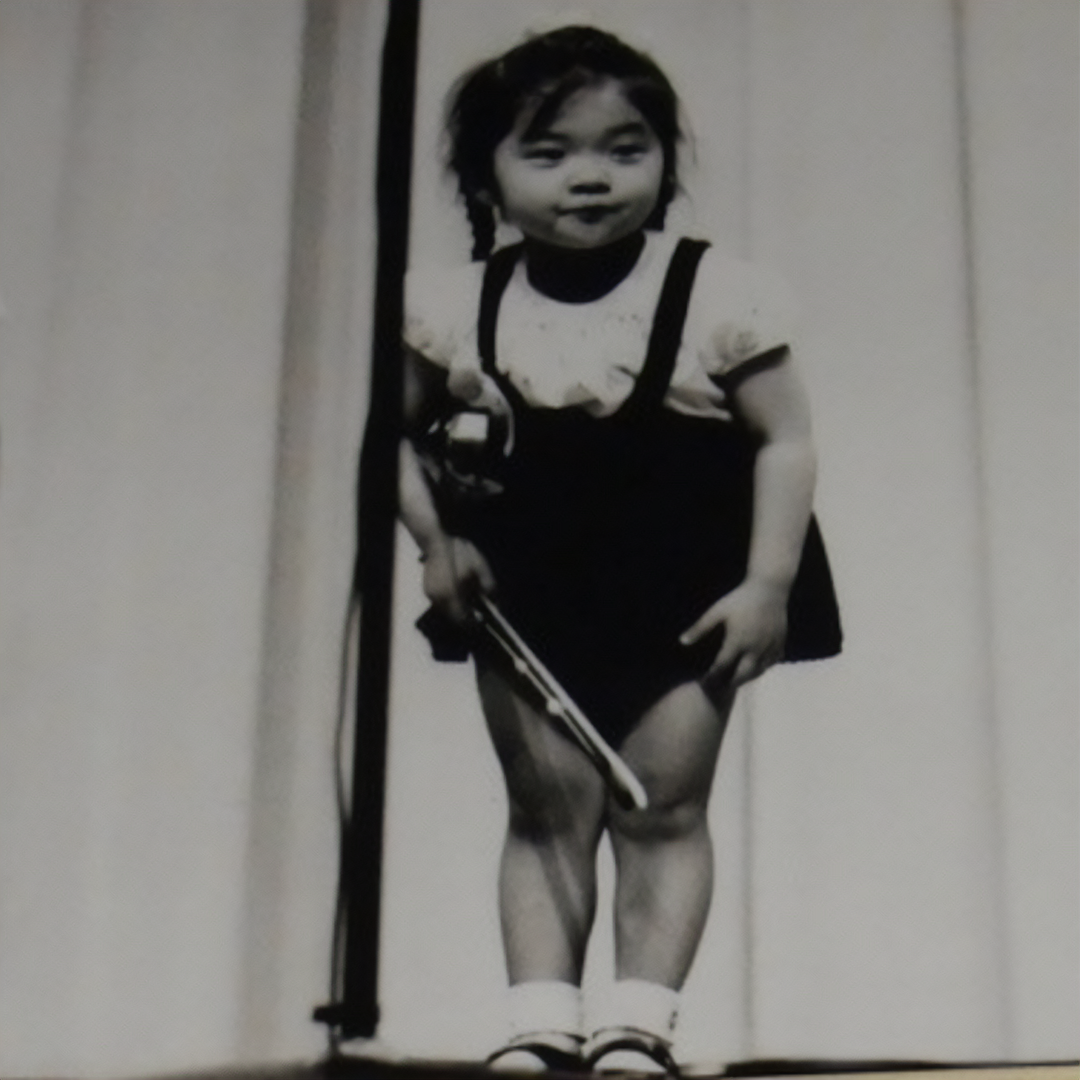
A young Aiko performs in Japan
She also fondly recalls her first violin teacher who had been tutoring her since the age of three.
“My first violin teacher was taking lessons from Dr Suzuki, and I loved her like a sister,” Aiko says. “She gave me incredible guidance and inspiration, which was continued with my other teachers across the Suzuki Method and the Toho Gakuen and Juilliard schools.”
Raised in an extended musical family – one of her aunts was an opera prima donna, her father’s cousin a jazz bassist, and her brother played piano – Aiko was inspired to take up the violin to play with her cousins. She studied at the Toho Gakuen School of Music in Japan, before moving to New York at the age of 21 to take up a scholarship at the Juilliard School, without knowing a word of English.
Aiko auditioned for the Australian Chamber Orchestra without knowing anything about Australia either. She had just always loved the intimacy of chamber music over playing within a full symphony orchestra. When she saw the ACO had placed an ad for a violinist in a musicians’ trade newspaper, she sent in her audition tape. She was slated for an audition when the Orchestra came to New York, where she was living.
“The night before the audition I went to see the ACO concert in Carnegie Hall. I still remember their programme, their sound, the stage, everything about the performance. From the very beginning of the concert, I was drawn into a whirlwind of emotions when I heard them play…it was truly wonderful.”
After her audition the next day, Aiko was thrilled to be invited to join the ACO as a member in 1998 and move to Australia, which has been her home ever since. She now performs all over Australia and the world with the Orchestra. “Along with all my teachers, performing with my wonderful colleagues from the ACO has shaped the person and musician I am today, and has made me wish to put all my energy into sharing music with everyone – especially young musicians and our audiences.
“It doesn’t matter which country, or culture, you play in; music is a universal language… it is from the heart,” she continues.
Aiko returns regularly to her country of birth to mentor and play at Japan’s Seiji Ozawa Matsumoto Festival, founded by one of her musical heroes, the late conductor Seiji Ozawa. But her favourite time of the year is July, when she directs the ACO Academy, an annual program for talented high school string players, in an inspirational week of intensive workshops, rehearsals and performances.
She loves watching the students evolve she says. From day one when they are so nervous they cannot look anyone else in the eye, to days two and three when they make some friends and are opening their ears to the music, and then the joy of watching them perform in concert together at the end of the week.
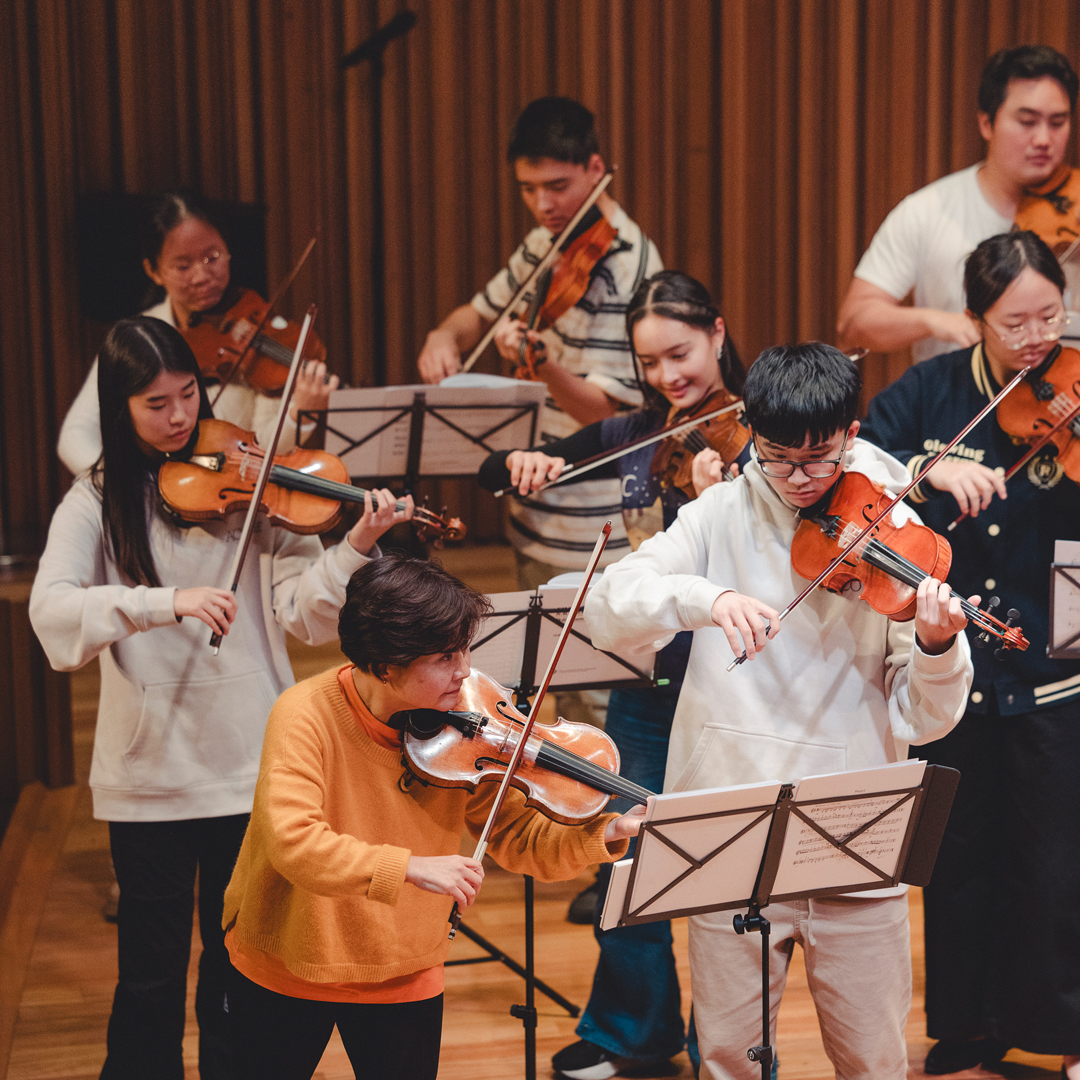
Aiko at ACO Academy, 2026
Aiko’s only regret is that she can’t accommodate more students from the multitude who apply each year from all over the country; it is her wish to accept all applicants, regardless of ability.
“ACO Academy is a wonderful place for students to learn from ACO musicians, develop their skills, and gain valuable string orchestra experience. It is also a great place to build confidence and be inspired by other talented musicians.”
She and her ACO colleagues teach the participants ensemble skills, technique and musicality, but also tenacity.
“The violin or any musical instrument is difficult. It is a lifelong challenge,” Aiko explains. “But these students persevere, and in turn I learn a lot from them as well. Mostly that making music is unlimited. We must never stop making it.”
Former Sydney Morning Herald journalist Helen Pitt is the author of the Walkley Award winning book The House, the extraordinary story of the Sydney Opera House and the people who made it, and Luna Park, which uncovers the showmen, shysters and schemers who built Sydney’s famous fun park.