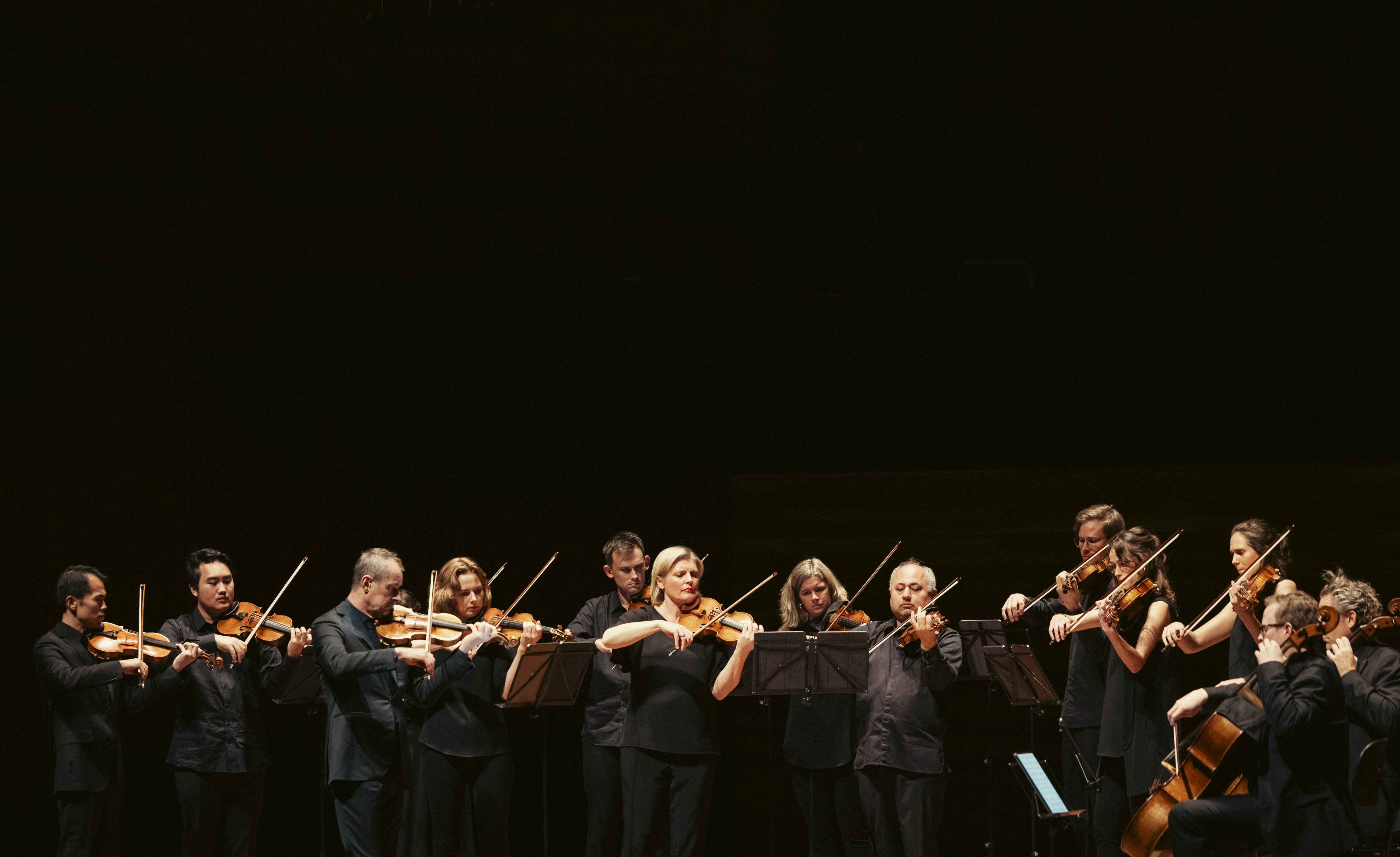
Ahead of the premiere of the brand-new ACO Families show, Pinocchio, we take a look back at the history of this beloved tale, and the twists, turns and remakes that have taken the boy made of wood from an Italian newspaper story to an international symbol of authenticity and morality.
Long before Pinocchio became a beloved animated film, it began life in weekly instalments, appearing chapter by chapter in an Italian newspaper.
In 1881, writer Carlo Collodi wrote La storia di un burattino - The Story of a Puppet, a tale that unfolded over two years before being published as a book in 1883. Collodi’s Pinocchio is unruly, impulsive and often difficult. He runs away from home, ignores advice, and repeatedly finds himself in trouble - not always by accident. His story moves through a series of strange encounters and moral parables as he makes his way (not always willingly) toward becoming a better version of himself. Collodi initially intended the story to end rather darkly. Early instalments concluded with Pinocchio hanged for his misdeeds, before public demand famously persuaded Collodi to continue the tale toward the more hopeful ending we recognise today.
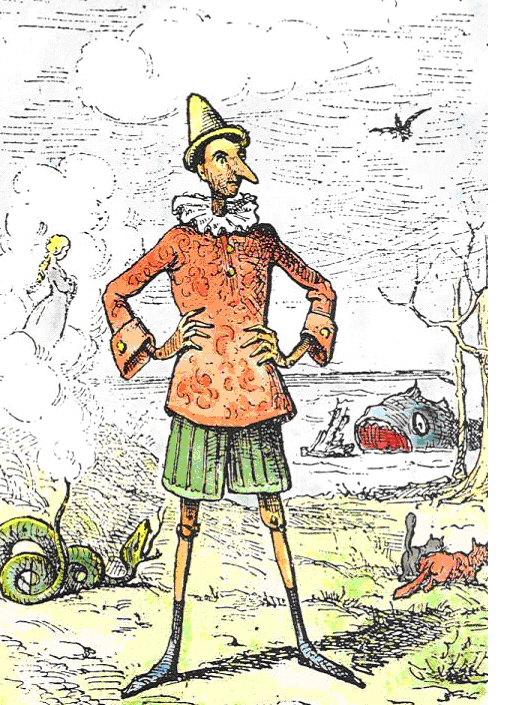
Illustration from 1883 edition by Enrico Mazzanti
And so, from the beginning, Pinocchio has been a narrative shaped not only by its authors, but by its audience.
Over the century and a half that has followed, Pinocchio has travelled far beyond its Italian origins. It has been translated into dozens of languages and reimagined across theatre, literature, film and television, with its iconic imagery and moral tale becoming recognisable the world over.
Part of its enduring appeal lies in its simplicity. At its core is a simple idea: a classic bildungsroman, a child learning how to be human.
Perhaps the most famous reinvention came in 1940, when Walt Disney Studios released its animated Pinocchio, a film that would become a landmark in cinema history. Loosely based on the original novel, Disney’s musically acclaimed version presents a more streamlined narrative, shaping Pinocchio into a more sympathetic and innocent character. The moral edges are softened, and the journey reframed as one of guidance rather than punishment. The film pushed animation into new territory, with unprecedented attention to detail in movement, light and atmosphere, from rippling water to drifting smoke. Over 2 million drawings were created during the production of the film, which was an enormous undertaking for the company at the time.
And of course, we cannot forget the music. Disney’s Pinocchio was one of the first animated features to place its songs and score at the centre of storytelling. Leigh Harline’s score, alongside songs such as When You Wish Upon a Star, gave emotion to the narrative, so much so that the film became the first to win Academy Awards for both Best Original Score and Best Original Song.
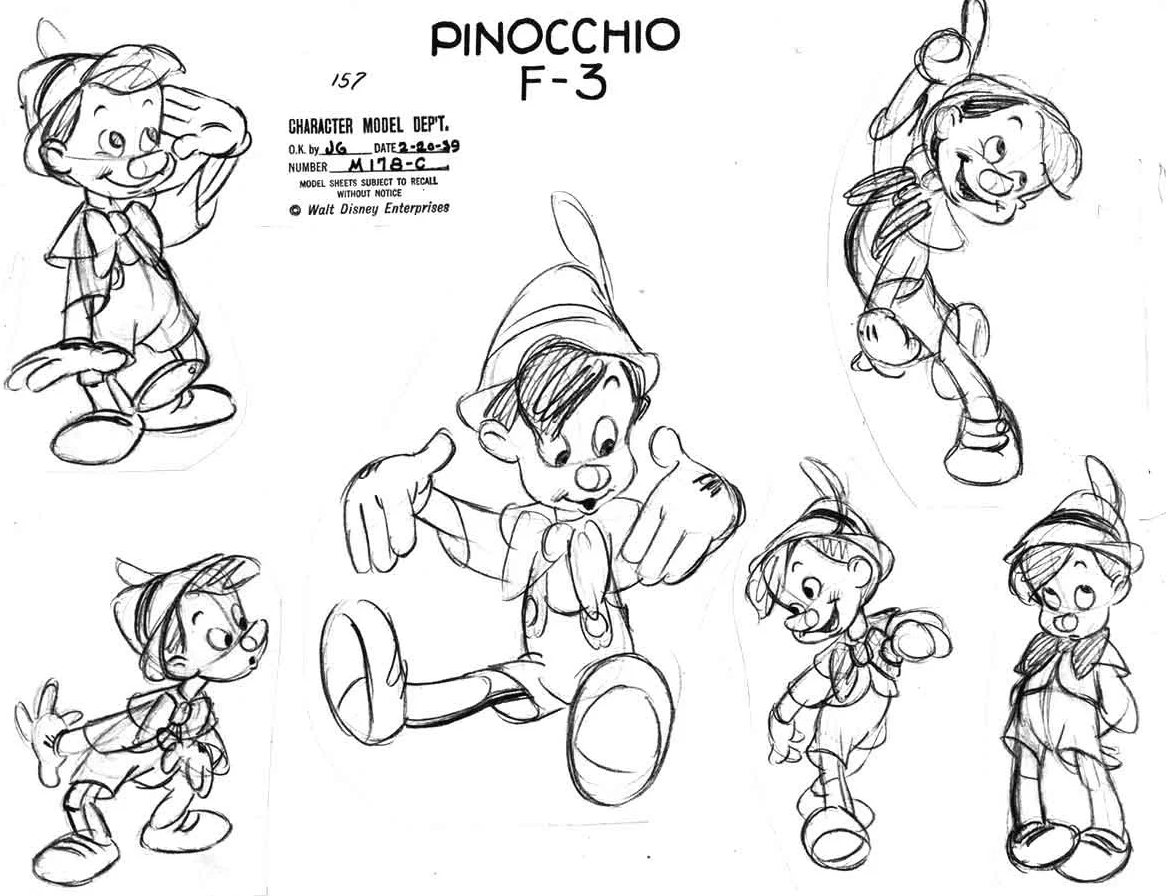
Since then, Pinocchio has continued to evolve. Stage productions, contemporary films and new adaptations have revisited the tale from fresh perspectives, each bringing its own tone, imagery and music. Many explore the idea of transformation, not only in Pinocchio, but in the people around him: Geppetto, Jiminy Cricket, and the characters who guide or mislead him along the way. The story has continued to evolve with the times, even through to 2022’s Guillermo del Toro’s Oscar-winning stop-motion film.
Part of its enduring appeal lies in its simplicity. At its core is a simple idea: a classic bildungsroman, a child learning how to be human. But that transformation has never followed a single path. Each retelling chooses its own themes: at times dark and cautionary, sometimes light and whimsical, or philosophical. That variability is part of the tradition. The Pinocchio you grew up with is just one of many.
This spirit of reinvention is at the heart of the ACO Families production of Pinocchio.
Like its predecessors, it draws on a rich past, echoing the original tale and the many versions that followed, but it also invites young audiences to experience the story afresh. Here, music plays a central role, not simply as accompaniment, but as a living, responsive part of the storytelling.
Across its long history, Pinocchio has always been shaped by the world it inhabits. This latest iteration by ACO Families continues that lineage, offering a version that speaks to today’s audiences, while honouring the story’s enduring themes of curiosity, consequence and authenticity. With its own distinctive sound world of instruments made from wood and strings, plus a newly imagined ending, the ACO’s Pinocchio invites families to encounter the latest iteration of this evolving story.
The world your child meets in Pinocchio today may look and sound different from the one you remember, as has become the tradition of the tale. From a mischievous serialised puppet, to a groundbreaking animated film and the many interpretations that have followed, Pinocchio has grown, adapted, and moved with the times, while remaining a heartwarming tale of morality.
Pinocchio is on at ACO On The Pier, 9-19 July 2026.