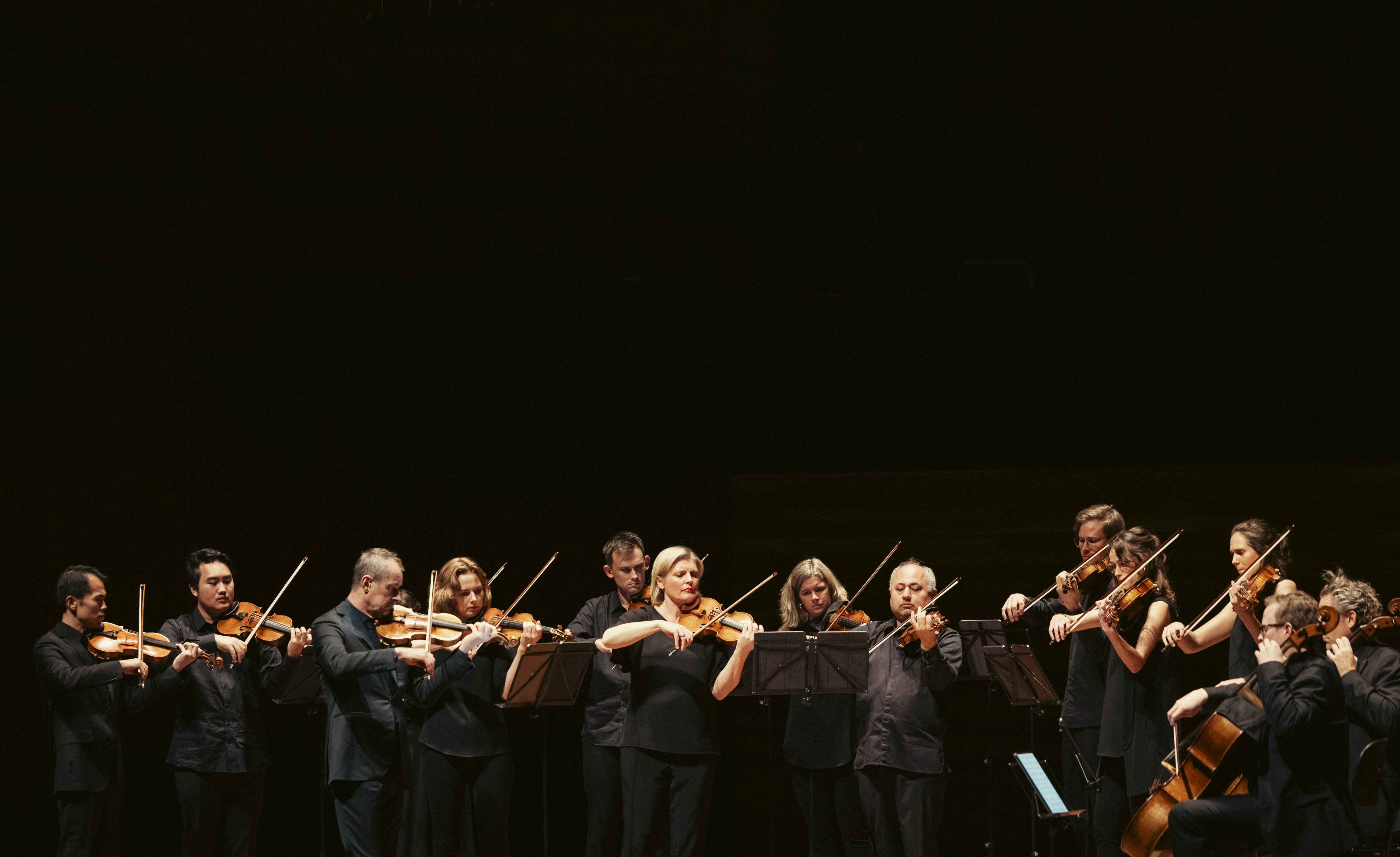
In conversation with Tim McGarry, the director of ACO Families production, Pinocchio.
At a time when digital media has become an inescapable part of our world, at the ACO we relish in the feeling of gathering together and enjoying a live performance. For ACO Families production Pinocchio director Tim McGarry, live performance offers something that sits alongside, not in competition with, the digital world.
“Live performance invites an audience to see the world from a new perspective, through a different side of a prism. It is one of the most effective forms of storytelling. And stories - whether it's through words, music or song - help us all understand the world around a little bit better, to empathise with a situation, to think about our own beliefs, values and experiences.”
“Despite the rise of the 'touch of a screen' entertainment,” McGarry says, live storytelling continues to hold its place because of its unique and time-honoured offering. “I've never viewed live performance in any kind of competition with screens and technology; it offers something different, a completely different kind of experience,” he says.
“Hearing live instruments changes the story experience dramatically – the live sound is visceral. It increases an audience’s emotional engagement, improves their attention span – and as a result broadens and deepens the understanding of the themes, the message, the heart of a work. There is nothing quite like it!”Pinocchio Director Tim McGarry
For many children, a performance might be their first encounter with live theatre or music, and for McGarry, that’s taken seriously. “It’s a big responsibility. We want them to become lifelong audience members and appreciators of all sorts of live performance.”
For families who aren’t sure whether their child is cut out to be a theatregoer, McGarry promises an experience to remember. “We are ready to engage all the senses… your young person (and you!) will be riveted from start to finish.” They may even leave with a touch of inspiration. “I often sit there and wonder – which instrument will most inspire a young audience member in this performance today? These young people are seeing musicians at the top of their game. Which one of these young peeps will say, as they walk through the door of the ACO as a musician in years to come ‘I saw my first performance here. And it was that performance which ignited my passion to become a lifelong musician’.”
The actions that happen around the performance - travel, a meal together, stories shared – all contribute to the meaning and memories of what happens on stage. Attending a live performance gives a structure to relationship building and socio-emotional development. McGarry describes this as “an intergenerational collective experience – where irreplaceable moments, chats, memories are shared beyond the performance, whether it's on the train getting there, or grandparents reminiscing about their younger selves. These moments are rarely quantified but are some of the most important moments of a young person's life.”
This sense of shared attention, presence and togetherness, also shapes how stories performed on stage are received. “It also feels like artists have an even greater role in building empathy in an increasingly fractured world.”
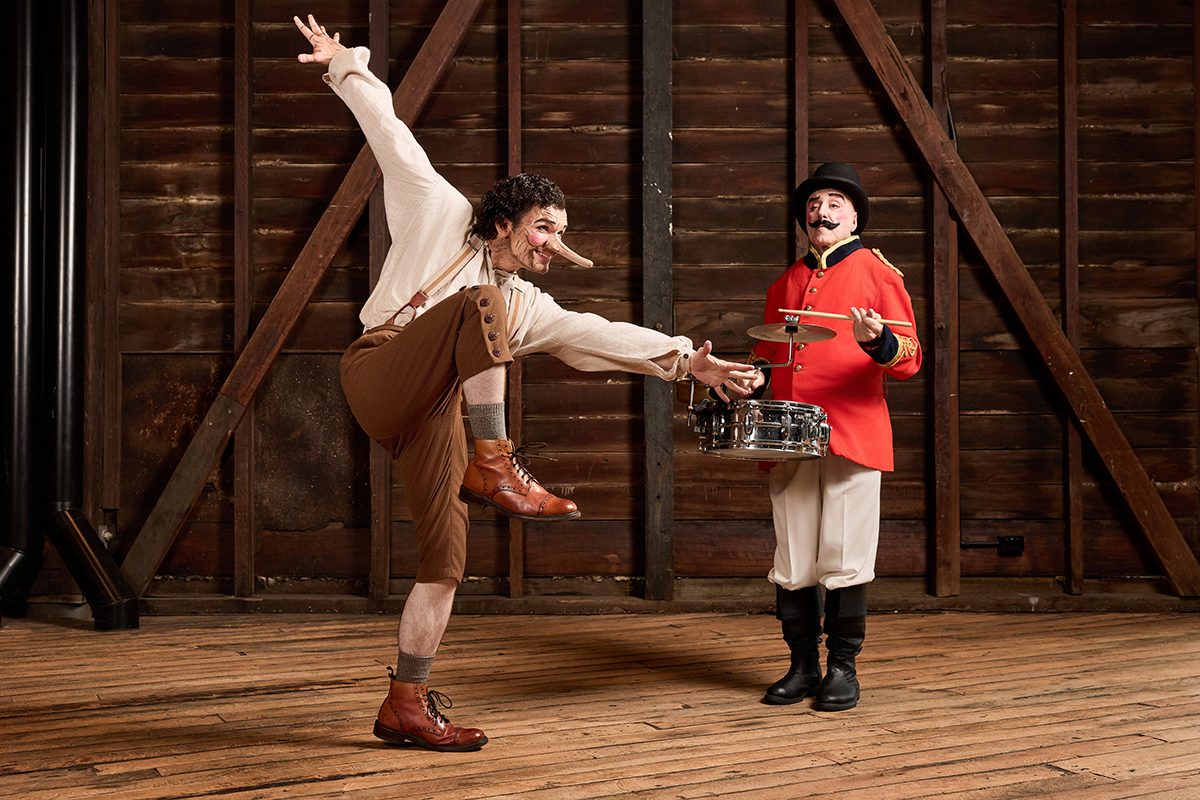
Pinocchio, photo by Daniel Boud
The fundamentals of live performance remain the same for children and adults alike. “At the end of the day, it all comes down to the power of the story and the journey of the characters. That is what keeps young minds focused and engaged. We all naturally want the hero to win. When the obstacles get tougher, we cheer even harder. And when the hero finally triumphs… everything feels right with the world, and everyone goes home happy,” McGarry says. Learning how to deal with adversity, and how to build resilience, feels safe, and more impactful, in a room where children can see actors as fully realised, three-dimensional people.
It can be easy to underestimate what children are capable of taking in, but as with adults, the impact of a performance lingers long after the concert hall. The adults who today attend live performances and appreciate the arts, tell tales of their childhood – the show that came to visit their primary school, a spectacle their grandparents took them to in the school holidays, or an end-of-year school musical.
“I think we, as adults, can underestimate a child’s capacity for complexity… a young person may not be able to intellectualise ‘why’ they are enjoying a piece, ‘why’ they feel a sense of complete and utter satisfaction after enjoying a performance piece, but they will come away ‘feeling’ different. Feeling better. Feeling a great sense of satisfaction.”
Pinocchio is on at ACO On The Pier, 9-19 July 2026.